Daddy

I wonder what it would feel like
to stand between Daddy’s knees
while he sat in that chair,
close enough to feel the warmth of him
before he ever touched me.

My dress falling softly around my thighs.
His eyes on me. Waiting.

Until his hands found the hem
and slipped beneath it, slowly, deliberately,
like he had all the time in the world
to discover what was waiting there.

I wonder if I would breathe his name
or forget how to speak entirely.
If his hands would wander higher,
drawing me closer until there was nowhere left
to pretend I didn’t want him.

God, I want to know what Daddy’s hunger feels like.

Not careful. Not measured.

The kind that makes him reach for me
before either of us has decided what happens next.

I want to know what it feels like when he grabs me
and suddenly my back is against the wall,
his body close to mine, his mouth finding mine
with all the longing we have never given words to.

A kiss that isn’t polite.

A kiss that says, there you are.

His hands roaming over me
like he has imagined this too,
like there are places on my body he has wanted to touch
and tonight he has finally stopped telling himself he shouldn’t.

I want to feel wanted without having to wonder.
To feel his fingers tighten around me
because closer still isn’t close enough.

To kiss him until the rest of the room disappears,
until there is only Daddy, my body against his,
and all those quiet, impossible things
we have never said.

But maybe that isn’t the part I want most.

Maybe the fantasy that ruins me comes later.

When the night has softened,
when I straighten my dress and find my shoes
and reach for the things that mean it is time to go.

I imagine Daddy watching me.

And for once, he doesn’t simply let me leave.

Stay.

One word. Maybe quiet. Maybe almost reluctant.

Stay.

And I look at him because surely I misunderstood.
But he reaches for me again.

Not because he wants another kiss.
Not because he wants my body.
Not because there is something else he wants from me.

Because he wants me there.

Stay a little longer.

So I do.

Maybe we talk. Maybe we laugh.
Maybe I curl against him with my head on his chest
and listen to his heartbeat without wondering
when I have overstayed my welcome.

Maybe he tells me things I have never been allowed to know.
Small things. Ordinary things.

The pieces of him that exist
outside closed doors and stolen moments.

Maybe Daddy lets me see the rooms inside him
I have only ever stood outside of.

And that is the fantasy I almost cannot bear.

Because I already know what it is to want his hands.
I know what it is to imagine his mouth.
I know what hunger does when I think about Daddy
wanting my body.

But this?

This is something far more dangerous.

Daddy wanting me to stay.
Daddy making room for me.

Daddy opening the door
instead of meeting me on the other side of it.

Daddy letting me in.

© 2026 Wynter Rayne. All rights reserved.

Fractures

She does not know exactly when the breaking began.
There was no great collision, no single moment violent enough
to explain the wreckage. Just small fractures.

A silence where there used to be words.
A hand that stopped reaching. A place beside someone
that slowly stopped feeling like hers. Another moment of realizing
she had mistaken being wanted for being chosen.

Another person who could find her when they needed warmth,
comfort, laughter, softness, something easy to reach for,
but somehow never learned how to reach for her
when she was the one who needed something.

And somewhere beneath all of that, the first crack appeared.

She covered it well. She has always known how.
She smiled over it. Worked over it. Wrote beautiful things over it.
Held other people’s pain with hands already trembling
beneath the weight of her own.

But cracks do not disappear because no one notices them.
They spread quietly through the places where hope lives,
through every tender part of her that still believed someday
someone might look at all that she is
and decide she was worth the effort of staying.

Not visiting. Not reaching when lonely.
Not remembering her when convenient. Staying.

And God, she is tired of pretending that wanting that does not hurt.

She is tired of being strong enough to understand everyone’s reasons.
Their lives are complicated. They are busy. They have responsibilities.
They are tired. They have their own wounds.

She knows. She always knows.

She can explain every absence until it sounds almost reasonable.
But understanding why someone does not choose her
has never made it hurt less to remain unchosen.

So another piece loosens. Then another. And another.
Until she can feel parts of herself falling away
while she stands perfectly still, trying not to make a sound.

Because there is something humiliating about breaking
over things everyone else seems able to survive.

So she gathers the pieces. Of course she does.
She tucks them beneath her ribs and carries them with her.

She goes to work. She answers messages.
She laughs. She creates. She shows up.

And no one hears the tiny sound of another piece hitting the floor.
But she does. She hears every one.

And today she does not want to turn this into something beautiful.
She does not want to be told the cracks are where the light enters.
She does not want gold poured into the fractures.

She does not want a lesson. She does not want resilience.
She does not want to become stronger
because something else managed to hurt her.

Today, she is simply breaking.

And maybe the saddest part is that some small piece of her
is still standing among the wreckage, still listening for footsteps,
still hoping someone will notice she is falling apart
before she has to learn how to put herself back together alone.

© 2026 Wynter Rayne. All Rights Reserved.

Unsent

She almost sent it. Something funny, something strange,
something that would have earned exactly the response
she already knew was coming. Her thumb hovered. Then stopped.
It was such a small thing to notice.

There had been a time when she never thought about whether to send something.
She just did. A ridiculous video. A song. A headline.
A random thought that required exactly one person
to understand why it was funny.

Somewhere along the way, someone had become part of her daily language.
Not dramatically. Not intentionally.
Just through the accumulation of ordinary things.
Conversations. Opinions. Sarcasm.

Advice she sometimes asked for and sometimes received without asking.
The occasional brutal observation she did not particularly want to hear
but usually needed. There was comfort in knowing there was someone
she could throw a thought toward and trust that something interesting would come back.

She valued that. More than she realized until it became less frequent.
She knows life gets complicated. People get overwhelmed.
Families need them. Responsibilities pile up.
Some people become quiet when the world gets heavy.

She knows all of this. Understanding, however,
does not make silence feel less silent.
And friendship is a strange thing. There are no contracts.
No required number of messages per week. No attendance policy.

No official notice when something changes.
Sometimes it simply does. One person notices first.
She noticed.

She also noticed that she had begun doing something she never used to do:
wondering if she was bothering someone.
That bothered her more than the silence itself.
Because friendship had never felt like asking permission to exist in someone’s day.

She considered asking about it. Directly. No drama. No accusations.
Just: What do you need from me?
Space? Fine. Someone in your corner? Already there.
She could work with almost anything except guessing.

But eventually she realized she had already provided all the information necessary.
She had shown up. She had checked in. She had cared.
Nothing more needed explaining.

So the next time something made her laugh, she didn’t send it.
When she saw something that would have started a twenty-minute argument
neither of them actually cared about, she kept scrolling.
When a thought appeared that belonged naturally in an old conversation,
she let it remain only a thought.

Not because she was angry. Not because she had stopped caring.
And certainly not because she wanted the friendship to disappear.
She simply stopped initiating. There is a difference.

She hopes someday she stops noticing every unsent thing.
She hopes even more that she doesn’t have to.

But for now, the funny video stays in her phone.
The thought goes unshared. The conversation remains quiet.
And for once, she lets someone else decide whether to start it.

© 2026 Wynter Rayne. All Rights Reserved.

Somewhere, Someday

Sometimes she dreamed of a place where no one knew her.

She could never quite see where it was. There were mountains in the distance, trees close enough to make the world feel hidden, and a balcony overlooking something beautiful she never managed to remember when she woke. It always rained there. Not the kind of rain that made people rush indoors, but the heavy, steady kind that gave permission to stay exactly where they were.

There was always a fire burning.

And there was always someone with her.

She could never quite see his face.

Maybe that was because the dream wasn’t really about him.

It was about waking slowly beside someone without immediately wondering what time it was. About coffee poured into mismatched mugs and carried onto the balcony while the rain fell beyond the roof. About conversations that wandered nowhere because there was nowhere else either of them needed to be.

Mostly, she dreamed about time.

She had spent so much of her life measuring it. Watching clocks. Counting hours. Learning how much of herself could fit inside the spaces other people had available for her. She knew how to make something meaningful from fragments. She knew how to treasure an afternoon because it would end, how to memorize a touch because she didn’t know when another would come, how to say goodbye while some part of her was still reaching backward.

In this place, she wouldn’t have to be good at that anymore.

There would be time to waste.

That thought felt almost decadent.

Coffee could grow cold because they had forgotten about it. A conversation could drift into silence without either of them rushing to fill it. She could fall asleep on the sofa with her feet in his lap and wake hours later to find him still there.

And because this was her dream, it was never entirely innocent.

There was a balcony where he could bend her over the railing while rain hammered against the roof and the mountains disappeared behind sheets of water. There were hands that knew when to be gentle and when gentleness was the last thing she wanted. There were mornings when she would find yesterday’s fingerprints still written faintly across her skin and have absolutely no reason to hide them.

But even that wasn’t what made her ache when she woke.

It was afterward.

The imagined weight of his hand resting on her thigh while they watched the rain. Her head against his shoulder. The fire slowly dying behind them because neither had bothered to add another log.

No urgency.

No countdown.

No wondering when she would see him again.

Just someone who stayed.

She didn’t know who he was.

Perhaps she wasn’t supposed to.

Maybe somewhere inside her, she simply needed to believe there could be a person whose presence wasn’t measured in borrowed hours. Someone she wouldn’t have to miss before he had even left. Someone who had nowhere else he was supposed to be when morning came.

She never dreamed about forever. Forever had always seemed too large a promise for something as fragile as human beings.

She dreamed about ordinary things instead.

Rain.

Coffee.

A fire.

A balcony.

A man’s hand reaching absentmindedly for hers because he could.

And time.

So much time that eventually she might stop being afraid of losing it.

© 2026 Wynter Rayne. All Rights Reserved.

Where She Was Most Fragile

“You know too much about me.”

His fingers paused against her shoulder.

They had been lying together for some time, the room quiet except for rain tapping softly against the windows. She was curled beside him beneath the sheets, his hand moving lazily over her skin.

He looked down at her.

“Is that a complaint?”

“I don’t know yet.”

His mouth curved.

“Let me know when you decide.”

She smiled despite herself.

Then she turned away from him.

Not because she was angry.

Some things were simply easier to say when she didn’t have to watch someone hear them.

His hand settled against her back.

He didn’t ask her to turn around.

“You know when I’m lying.”

“Not always.”

“Most of the time.”

“You’re not as mysterious as you think you are.”

She glanced at him over her shoulder.

“I am incredibly mysterious.”

“Of course.”

She could hear the smile in his voice.

She turned back toward the darkness.

His fingertips began moving slowly along her spine again.

“You know when I’m afraid.”

His hand slowed.

“You know when something hurts even when I say it doesn’t. You know when I need you to leave something alone.”

A pause.

“And when you shouldn’t.”

His voice was quieter now.

“Yes.”

She drew the sheet a little closer around herself.

It was strange how naked she suddenly felt.

More naked than she had been beneath his hands.

“You know which things I laugh about because admitting they hurt would make them real.”

“I know.”

“You know the stories I don’t tell people.”

“Yes.”

She swallowed.

“You know things I’ve never told anyone.”

His fingers reached the base of her neck.

He left his hand there.

Warm.

Still.

She stared into the darkness.

“You know exactly how to hurt me.”

His hand stopped.

For several seconds, neither of them spoke.

Then he answered.

“Yes.”

She turned toward him.

There was no smile now.

“How can you say that so easily?”

“Because pretending I don’t know wouldn’t make it less true.”

She watched him.

“You’ve trusted me with the places that hurt,” he said. “Of course I know where they are.”

Something tightened beneath her ribs.

“Doesn’t that scare you?”

“No.”

“Why not?”

His thumb moved slowly against her shoulder.

“Because knowing where you’re fragile doesn’t make me want to press there.”

He held her gaze.

“It makes me careful.”

She looked away.

There were certain sentences that found their way beneath every defense before she had time to raise one.

That was one of them.

“Besides,” he said, “you know how to hurt me too.”

Her eyes returned to his.

“No, I don’t.”

“You do.”

“I wouldn’t.”

“I didn’t say you would.”

He let the distinction settle between them.

“I said you know how.”

She opened her mouth to argue.

Then stopped.

Because she did.

She knew when his silence meant peace and when it meant something was weighing on him.

She knew which jokes were only jokes and which ones were armor.

She knew the things he dismissed too quickly.

The disappointments he pretended hadn’t mattered.

The places where confidence became something more carefully constructed.

She knew what he protected.

She knew what he feared losing.

She knew where he was soft.

And suddenly, she understood.

They had been learning how to hurt each other all along.

Not intentionally.

That was simply what happened when two people stopped hiding.

Every confession revealed another tender place.

Every whispered truth exposed another seam.

Every I’ve never told anyone this placed something fragile into another person’s hands.

Intimacy had never been merely allowing someone access to your heart.

It was teaching them how it worked.

What made it race.

What quieted it.

What frightened it.

What had broken it before.

She had handed him every weapon he would ever need.

And somehow, in his hands, they had never become weapons.

They had become instructions.

Be gentle here.

Don’t disappear here.

This scar still aches.

This one only looks healed.

Hold this carefully.

She turned toward him completely.

His hand slipped from her shoulder to her waist.

“You trust me with all of that?” she asked.

“Yes.”

“Why?”

He considered her for a moment.

Then his fingers tightened slightly against her waist.

“Because you’ve had plenty of chances to hurt me.”

She waited.

“And you haven’t.”

There was something almost unbearably intimate about that.

Not a promise.

Evidence.

She moved closer.

His arm opened for her without being asked, and she settled against his chest.

For a while, she listened to his heartbeat.

Steady beneath her ear.

His hand traveled slowly along her back again.

She had once believed trust meant finding someone who could never hurt her.

Someone safe because they possessed no weapons.

She understood now how impossible that was.

Love itself created the weapons.

The closer someone came, the more they learned.

The more they learned, the more damage they could do.

Perhaps intimacy was not becoming invulnerable.

Perhaps it was allowing someone to know where you were most fragile and discovering that knowledge made their hands gentler.

She closed her eyes.

He knew where she was fragile.

She knew where he was too.

Neither of them was harmless.

That had never been the point.

Perhaps trust was knowing exactly what someone could do to you.

And sleeping beside them anyway.

© 2026 Wynter Rayne. All rights reserved.

The Things He Loved In Her

He never fell in love with the beautiful parts first.

That was what frightened her.

Others had loved her laughter. Her mouth. The softness of her body beneath their hands. They loved the woman she became in candlelight, dressed in black with wine-dark lips and enough mystery left between them to make desire easy.

They loved what she allowed them to see.

He loved what she tried to hide.

The first time she realized it, they were sitting together in the dark.

A storm had taken the electricity hours before, leaving the old house illuminated by candles. She sat on the floor between his knees, his fingers tangled loosely in her hair.

“There are things about me you wouldn’t love.”

His fingers stopped.

“Show me.”

She laughed softly. “No.”

His hand moved from her hair to the side of her neck.

Warm. Still. Patient.

“Then why tell me they’re there?”

She stared into the candlelight.

So she gave him one truth.

Then another.

The anger she swallowed because she had learned to make anger pretty before anyone else had to witness it.

The jealousy.

The hunger.

The nights she wanted to be held and the nights she wanted everyone in the world to disappear.

She told him that sometimes love made her possessive. That abandonment could turn something tender inside her sharp. That she wanted to be wanted so completely that moderation sometimes felt like rejection.

When she finished, she could barely look at him.

“Aren’t you going to say something?”

“Are you finished?”

She looked up sharply.

“I just told you the worst things about me.”

“No.”

His thumb moved once against her skin.

“You told me the things you’re ashamed of.”

“What’s the difference?”

“Shame isn’t proof of wickedness.”

Something inside her shifted.

She looked away.

He leaned closer, his mouth near her ear.

“Try again.”

The words traveled through her more intimately than a kiss.

So she did.

She took him into the locked rooms.

The places where old grief still paced at night.

The places where she was not gentle or reasonable or easy to love.

The parts of herself she had spent years making smaller so no one would ever have to decide whether they could tolerate the whole of her.

When she finally stopped speaking, his hand slipped from her neck.

Her heart sank.

There.

She had done it.

She had finally shown someone enough truth to make them leave.

Instead, he lowered himself onto the floor in front of her.

“What are you doing?”

“Looking.”

“At what?”

“You.”

His answer irritated her.

“You’ve been looking at me all night.”

“No.”

He reached for her hand.

“You’ve been showing me a woman you think needs forgiveness.”

His fingers threaded through hers.

“I’m trying to find the monster.”

A startled laugh escaped her.

His mouth curved.

“There she is.”

She pushed lightly at his shoulder.

He caught her wrist.

Not roughly.

Just enough.

The laughter disappeared.

His thumb passed slowly over her pulse.

Her body betrayed her immediately.

His eyes darkened.

“You don’t frighten me,” he said.

“Maybe I should.”

“Maybe.”

His fingers loosened, but she didn’t pull away.

“What if you eventually find something you can’t love?”

He touched her cheek.

“Who told you love requires me to approve of everything you are?”

She went still.

Love had always seemed conditional upon goodness.

Be soft.

Be useful.

Be easy.

Want, but never hunger.

Need, but never become inconvenient.

Bleed, but do it somewhere no one has to clean afterward.

She had spent half her life trying to become lovable.

His fingertips traced her jaw.

“I don’t need you innocent.”

Her breath caught.

“I need you honest.”

And that was when she understood the danger of him.

It wasn’t that he wanted to possess her darkness.

It wasn’t that he promised to heal it.

He simply wasn’t afraid to sit beside her inside it.

She had always believed the terrifying thing would be someone discovering the worst parts of her and leaving.

She had been wrong.

The terrifying thing was someone discovering them and staying.

Someone who could touch every scar without recoiling.

Someone who could walk through the darkest rooms inside her without reaching for a light.

Someone who knew where all the broken things were kept.

And held them gently anyway.

Because once someone has loved you in the places you believed were unlovable, they become difficult to forget.

They leave fingerprints on ghosts.

They change the architecture of your loneliness.

They teach the darkness your name.

She looked at him across the flickering candlelight.

He still held her wrist loosely in his hand.

She could have pulled away.

She didn’t.

And for the first time, she understood that being seen was far more intimate than being touched.

© 2026 Wynter Rayne. All rights reserved.

The Shape of His Darkness

She had always known there was something wrong with the way he loved her.

Not wrong in the ordinary ways.

He was not cruel. He did not raise his voice or break things against walls. He never threatened to leave when she displeased him, never made her chase after scraps of affection.

His darkness was quieter than that.

It lived in the certainty with which he touched her.

In the way his hand would settle at the back of her neck when they stood together, neither gripping nor restraining, simply resting there as though some part of her belonged naturally beneath his palm.

In the way he looked at her when she spoke of leaving.

Not frightened.

Not angry.

Almost amused.

As if they both knew she would not.

Perhaps that should have frightened her more than it did.

Instead, she loved him.

God, how she loved him.

She loved him in candlelight and thunderstorms. She loved him in the gray hours before morning when the house seemed suspended somewhere between dreaming and waking. She loved the scent of him lingering on her sheets and the faint indentation his body left beside hers.

She loved his silences most dangerously of all.

There were nights when he said almost nothing.

He would sit beside her and draw one finger slowly along the inside of her wrist, tracing the blue veins beneath translucent skin.

Such a vulnerable place.

Such an intimate reminder that something vital beat just beneath the surface.

His thumb would find her pulse.

“There you are,” he would murmur.

As though he had been searching for her.

As though this tiny rhythm belonged to him simply because he had discovered it.

She should have pulled away.

She never did.

Instead, she watched his fingers move over her skin and wondered when being known had begun to feel so much like being possessed.

Perhaps there had never been much difference.

Before him, she had believed love should make a person lighter.

She had believed all the pretty things people said about it.

Love should free you.

Love should heal you.

Love should make you more yourself.

Then he came into her life and taught her that love could be something else entirely.

Love could have weight.

It could settle into the hollow places between ribs.

It could curl itself around the spine.

It could become something carried inside the body until removing it would require tearing away pieces of yourself with it.

And still, somehow, she felt more herself with him than she ever had without him.

That was the contradiction she could never resolve.

“You know you could leave.”

He said it one evening while rain whispered against the windows.

She was standing before him in the darkened bedroom, wearing nothing but a thin black nightdress. Candlelight moved across her skin while the storm painted brief silver veins across the glass.

His hand rested against her hip.

Not holding.

Never holding.

That was important.

She looked down at him.

“Could I?”

His eyes lifted to hers.

“Yes.”

The answer came too quickly.

She smiled faintly.

“You sound very certain.”

“I am.”

His fingers moved slowly along her waist.

“You’ve always been free.”

Something inside her tightened.

Because that was the cruelest thing he could have said.

If he had trapped her, she could have hated him.

If he had demanded she stay, she could have rebelled.

If he had closed his fist around her, eventually she might have fought to escape it.

Instead, he opened his hand.

And waited.

She stepped closer.

His forehead came to rest against her stomach.

For several seconds neither of them spoke.

Her fingers moved into his hair.

Outside, thunder rolled somewhere far away.

“You make freedom very difficult,” she whispered.

She felt his smile against her.

“No.”

His hands traveled slowly up her sides.

“I make staying worth the price.”

There it was.

The darkness.

Not hidden.

Not disguised.

Placed gently between them like an offering.

She could have pretended she had never seen it.

She could have told herself his devotion was uncomplicated, that his possessiveness was merely passion, that the relentless pull between them was nothing more dangerous than love.

But she had always known better.

There were pieces of him she would never reach.

Locked rooms behind his eyes.

Old wounds he guarded like sacred relics.

Things he had survived but never buried.

Sometimes she caught glimpses of them when his expression changed unexpectedly, when tenderness became something almost desperate beneath his hands.

He loved as though everything beautiful was temporary.

And because of that, he held beautiful things very carefully.

Perhaps too carefully.

She touched his face.

He turned his mouth against her palm.

The kiss was soft.

Almost reverent.

That frightened her more than hunger ever could.

Desire was easy to understand.

Reverence was dangerous.

Reverence made altars out of ordinary people.

And eventually every altar demanded sacrifice.

“What happens if this ends?” she asked.

His hands became still.

For once, there was no immediate answer.

Rain moved steadily against the windows.

She could feel his breathing beneath her palm.

Finally, he looked at her.

“It will hurt.”

She laughed softly, though there was no humor in it.

“That’s all?”

“No.”

His fingers closed around hers.

“It will hurt in places you didn’t know I had touched.”

Her breath caught.

There were warnings that sounded like threats.

There were warnings that sounded like invitations.

His sounded like truth.

He raised her hand and kissed the center of her palm.

She understood then.

He had never promised not to hurt her.

He had never promised forever.

He had never claimed that loving him would leave her unchanged.

He had only promised that while she was there, she would be seen.

Completely.

Even the pieces she kept hidden from everyone else.

Especially those.

And perhaps that was the darkest part of loving him.

He knew exactly who she was.

And she knew exactly who he was.

There would be no innocence to hide behind later.

No claiming she had mistaken darkness for light.

She had seen the shadow from the beginning.

She had simply discovered something beautiful living inside it.

She lowered herself into his lap.

His arms came around her slowly.

The storm continued beyond the windows, but the room felt impossibly still.

She rested her cheek against his chest and listened to his heart.

He kissed her temple.

“Still free,” he whispered.

She closed her eyes.

“Yes.”

His arms loosened.

Giving her space.

Giving her the choice again.

Perhaps that was what made it unbearable.

The door had never been locked.

The cage had never existed.

There was only this man.

This darkness.

This terrible tenderness.

And her own heart returning to him again and again.

She curled closer.

His arms closed around her.

Not because he had kept her.

Because she had stayed.

And somewhere beneath all that tenderness, beneath the longing and devotion and the beautiful promises neither of them was foolish enough to make, darkness moved quietly through the heart of their love.

She knew it was there.

So did he.

Neither of them tried to extinguish it.

Because some loves were not meant to drag darkness into the light.

Some loves learned how to see inside it.

And stayed anyway.

© 2026 Wynter Rayne. All rights reserved.

The People of Haven

There are stories we enjoy, and then there are stories that quietly become part of who we are. For me, Haven has always been one of those stories.

I just finished watching it again, and somehow, after all these years, I still found myself crying through the final episodes.

You would think that knowing every twist would soften the ending. That familiarity would somehow lessen the heartbreak. Instead, it seems to do the opposite. Every rewatch allows me to notice something I missed before. A conversation. A sacrifice. A glance between two characters that suddenly carries the weight of everything I already know is coming.

There are very few television shows that have remained with me this way. More than a decade after its finale aired, Haven continues to feel less like a television series and more like a place I return to when I need to remember something about humanity.

Perhaps that should not surprise me.

Its roots begin with my favorite author, Stephen King. While Haven is only loosely inspired by The Colorado Kid, it carries what I have always loved most about King’s storytelling. It was never the monsters that drew me to his work. It was the people. King has always understood that the most terrifying things we face are not supernatural. They are grief, guilt, loneliness, shame, regret, and love. Those are the forces that shape us long after the ghosts have disappeared.

Haven understood that beautifully.

The Troubles were never simply strange supernatural abilities. They were emotional wounds given physical form. Fear destroyed homes. Anger injured innocent people. Grief became something capable of consuming an entire town. Every affliction reflected a truth therapists witness every day. Pain that is never acknowledged rarely stays contained. It spills outward. It touches everyone around us.

As both a therapist and someone endlessly fascinated by human behavior, I think that is one of the reasons this series has never let me go. Beneath every mystery was a question about identity. Beneath every curse was a story about belonging. Beneath every impossible choice was someone simply trying to love the people who mattered most.

Then there are the characters.

Not one of them feels disposable.

Duke Crocker’s transformation from charming opportunist to selfless protector remains one of my favorite character arcs in television. Vince and Dave somehow balance humor with centuries of impossible responsibility. Dwight quietly becomes the kind of leader who asks for little recognition while carrying enormous burdens. Even the recurring characters are written with enough depth that they feel like neighbors instead of plot devices. They are flawed. Funny. Frustrating. Loyal. Human.

By the end of the series, saying goodbye to them feels less like finishing a show and more like leaving behind people you genuinely cared about.

But it is Nathan and Audrey who continue to stay with me.

I hesitate to even call theirs a romance because that word feels too small.

What they share is devotion.

Nathan loves Audrey through every version of herself. Whether she remembers him or not, whether she is Audrey, Lucy, Sarah, Mara, or someone else entirely, he never falls in love with a name. He never falls in love with a memory. He falls in love with the essence of who she is.

There is something profoundly beautiful about that.

He recognizes her kindness before she remembers it herself. He sees her courage before she believes she possesses it. He trusts the goodness at her core even when the circumstances around them suggest he should not. Nathan’s love is never rooted in familiarity. It is rooted in recognition.

He sees her soul.

Audrey’s devotion is no less extraordinary. She continually walks toward the one person she knows may ultimately cost her everything. She allows herself to love even when loving feels dangerous. Even when every step closer to Nathan threatens to unravel the future of the town she has spent years trying to protect.

What fascinates me is that their love is not portrayed as something magical that fixes everything.

Sometimes it makes everything worse.

Sometimes their refusal to let go creates more chaos. Sometimes hope delays the inevitable. Sometimes love itself becomes tangled in impossible consequences.

That feels incredibly honest.

Real love is rarely simple. It asks us to hold competing truths at the same time. We can deeply love someone while recognizing that love alone cannot solve every problem. We can desperately want a different ending while accepting that reality is asking something else of us.

The older I get, the more I realize that this may be one of the greatest strengths of Haven. It refuses to reduce love to possession.

Nathan and Audrey never spend their story asking, “How do I keep you?”

Instead, they spend it asking, “How do I protect you? How do I protect everyone?”

By the final episodes, they discover that those two questions no longer have the same answer.

After years of searching for one another across lifetimes, memories, and impossible odds, they are finally given the opportunity to have the life they fought so hard to build. Yet they are ultimately asked to surrender it. Not because they failed. Not because they stopped loving each other. But because preserving Haven required them to sacrifice the very future they had spent years trying to reach.

That is what still undoes me.

As strange as it sounds, I do not think Haven is ultimately a story about the Troubles. I think it is a story about what we continue to choose when life becomes impossibly difficult. It is about choosing people after they have made mistakes. Choosing hope after devastating loss. Choosing compassion when fear would be easier. Choosing sacrifice over self-interest. Most of all, it is about choosing love, even when love asks for everything you have to give.

As a therapist, I think about Nathan’s love for Audrey often. Every person who sits across from me has a story that has shaped them. Trauma changes people. Grief changes people. Mental illness changes people. Life changes people. Yet beneath all of those experiences is still a person worthy of being seen. Sometimes they have simply forgotten who they are. Sometimes the world has convinced them they are nothing more than the worst thing that has ever happened to them.

Nathan never lets Audrey forget that she is more than what has happened to her.

Perhaps that is what every one of us longs for.

Not someone who loves us because life has been easy or because we have remained unchanged, but someone who can still recognize us after life has done its worst. Someone who sees the person beneath the grief, beneath the mistakes, beneath the fear, beneath the scars, and quietly says, I know you’re still in there.

Perhaps that is why their relationship has always felt so deeply meaningful to me. It is not built on perfection. It is not sustained by passion alone. It is built on seeing another human being completely and choosing them anyway.

Maybe that is why I continue returning to Haven. Not because I expect the ending to change, but because every time I leave that little town in Maine, I find myself carrying something back into my own life.

I leave reminded that people are rarely defined by the worst thing that has happened to them. That identity is deeper than memory. That healing is rarely a straight path. That redemption is possible. That community matters. That love is less about finding someone who never changes and more about recognizing them through every change they endure.

And perhaps that is why, more than a decade later, I still wish Haven would come back.

Not because I need another season.

Because I miss spending time with people who reminded me that goodness still exists. Characters who were messy, stubborn, frightened, imperfect, and heartbreakingly human. Characters who loved fiercely, failed often, forgave repeatedly, and kept showing up for one another anyway.

Those are the stories that stay with us. Not because they allow us to escape reality, but because they quietly teach us how to live within it.

That is what Haven became for me. It was never just one of my favorite television shows. It became a reminder of why I still believe in people. Why I still believe that even our deepest wounds do not have to define us. Why I still believe that the greatest expression of love is not found in possession, but in devotion. Even now, after all these years, I still cry when the story ends.

Perhaps that is because it never really does.

Maybe that is why, after all these years, Haven never really ends. Because the people of Haven never really leave us. They simply become part of the people we are still becoming.

© 2026 Wynter Rayne. All rights reserved.
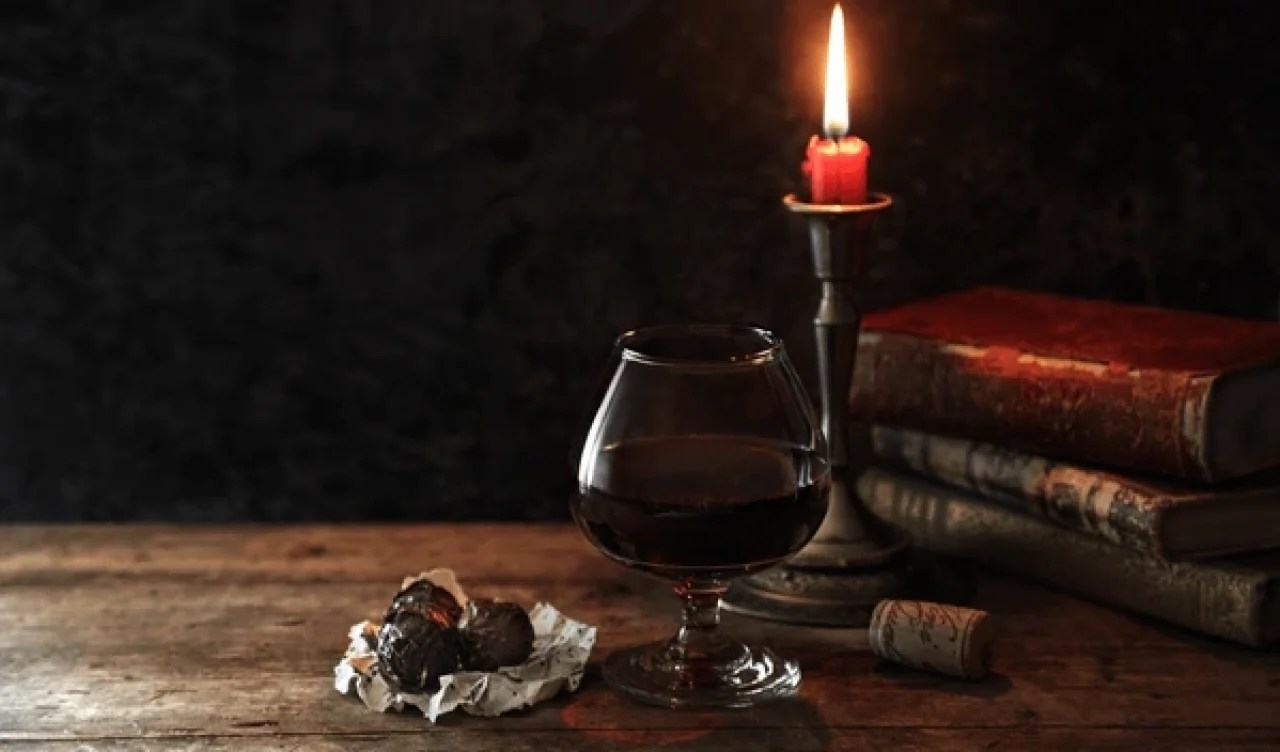
He Will Never Know

She feels too much,
but that has never been a flaw.
It is the way she was made.

Every glance lingers longer than it should.
Every word settles deeper than it is meant to.
Every silence says more than either of them will allow.

She knows the shape of what he carries,
the quiet exhaustion,
the things he does not say out loud,
the life he built with careful hands,
brick by brick,
promise by promise.

She sees where it does not fit him anymore,
where it presses in,
where it asks him to stay smaller than he is.

And she could give him something different.

Not just the heat of bodies,
not just the pull that exists when they are too close,
but something steadier,
something that lets him breathe.

She could give him the life he wonders about
in the spaces he does not let himself linger in.

But she will never say it.

Because he is an honorable man.

And she knows that about him,
respects it in a way that costs her something.

He will not break what he has built,
even if it bends him,
even if it asks more than it gives.

And she will not be the reason
he questions himself.

So she keeps it where it cannot ruin him,

tucked behind steady words,
hidden in the way she looks at him,
contained in moments that never cross the line.

She will give him what she can
without ever asking for more.

Care that does not claim,
presence that does not demand,
a kind of love that knows its place.

He will never know
how close she comes to saying it,
how often the words rise
and are swallowed back down.

He will never know
that she has already chosen him
in the quiet ways that do not change anything.

And that is the part she will carry.

Not regret.
Not resentment.

Just the weight of something real
that was never meant to be spoken.

And the knowing
that loving him will always require
her absence.

The Moon Sees What They Become

She rises swollen and solemn,
an ancient sentinel carved in bone and pearl.
Half her face cloaked in shadow.
Half of her watching. Always watching.

Clouds crawl like bruises across her cheek.
The stars hold their breath.

Below, in a room where the curtains gape
like parted lips,
a couple performs for no one—
and everything.

The woman is already bare when he steps behind her,
his presence the only warning she needs.
Not a word is spoken.
They have long outgrown words.

She bends forward slowly,
palms splayed on cold windowpane,
the curve of her spine a deliberate shape—
offering, invitation, display.

She does not close the curtains.
She never has.

She knows the moon is there,
her cold eye feasting,
her silver tongue licking the glass
between sanctity and sin.

The man’s hands find her hips like he owns them.
Like he’s claimed them before.
Like he intends to again.

And he does.

He presses into her,
slow at first,
a cruel tease meant more for the sky than her.
She gasps, but not from surprise.

This is ritual.
This is worship with skin and sweat.

The moon’s light splits them in halves—
gleaming skin and long shadows,
her breast reflected against the window,
his hand gripping her throat as he moves inside her.

She opens her eyes. Looks into the night.
Her moans fog the glass.
She spreads wider.

She wants to be seen.

Not by a crowd.
Not by a man.

By the night itself.

By the dark goddess above who sees all,
who has watched civilizations fall and kings beg,
but pauses now to watch this—

a woman unraveling from the inside out
on the altar of her own windowsill.

He takes her deeper now,
fingers bruising her skin in devotion.
Their rhythm is not frantic.
It’s hungry. Intentional.
The kind of pace that says
he wants the moon to watch.
He wants the stars to weep.

She reaches back for him,
nails clawing into his thigh,
hips driving back like she’ll swallow him whole.

He fists her hair, yanks her up—
her back arched, her breasts glistening in lunar fire.
His teeth scrape her shoulder.
She bares her neck like prey
and smiles like a weapon.

The moon does not blink.

She watches the moment he spills into her
and whispers something only the glass hears.
Something she doesn’t need to answer.
Something she already knows.

After, the woman presses a kiss to the window.
Lets the sweat cool.
Lets the night see her ruin.

Lets the moon see
what they’ve become.

Because this is what the moon is for—

To witness.
To hunger.
To hold the shame and sanctity of desire
in the cradle of her cold, wide eye.

She sees.
And she remembers.

© Wynter Rayne, 2026. All rights reserved.